

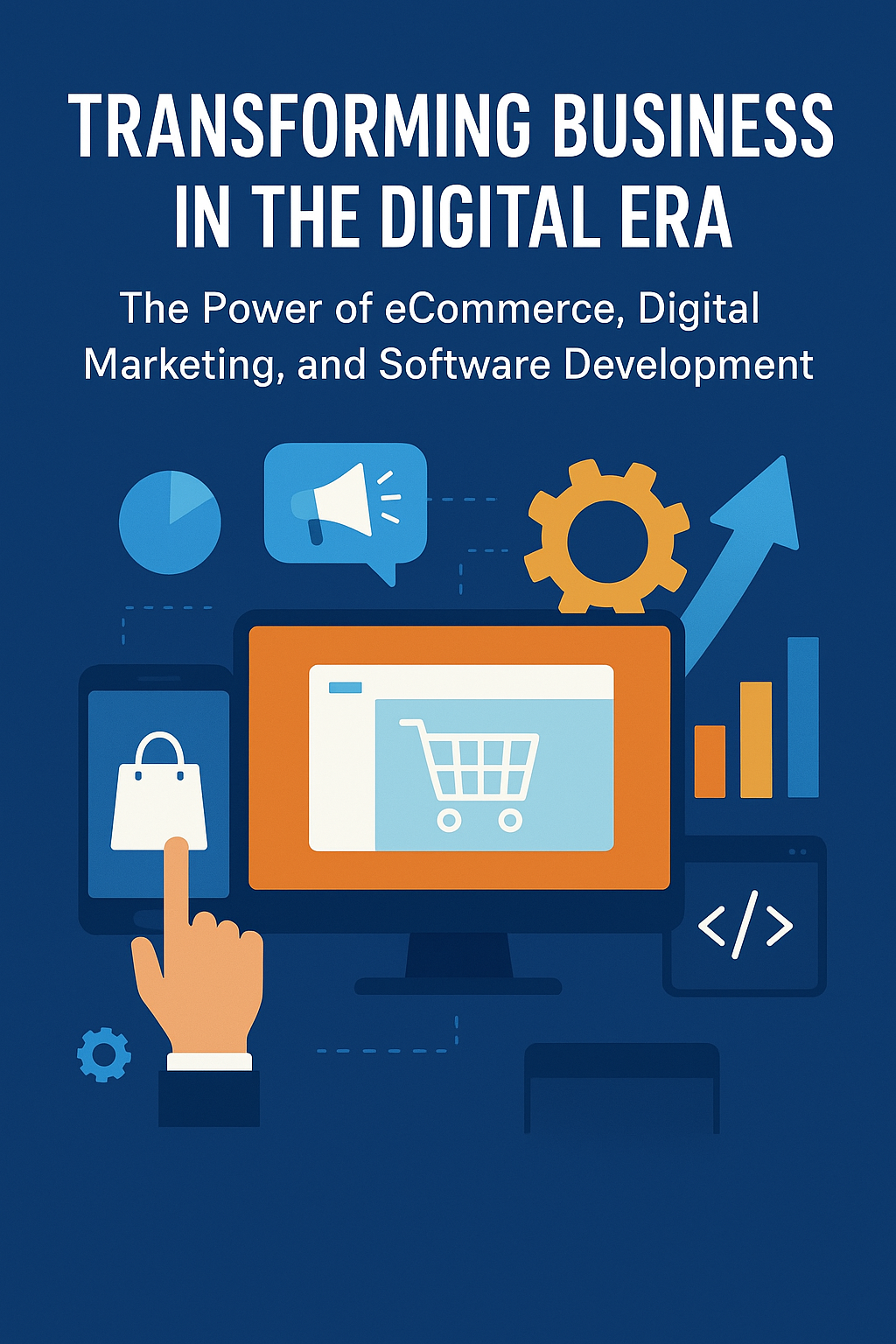
In today’s rapidly evolving digital landscape, businesses must adapt or risk falling behind. The convergence of eCommerce, digital marketing, and software development has redefined how companies engage with customers, streamline operations, and scale their growth. From small startups to multinational corporations, embracing these three pillars is no longer optional—it is essential for survival and success. In this blog, we explore how these domains interconnect, the latest trends, and actionable strategies for businesses to thrive in the digital era.
The Rise of eCommerce: A Global Shift
eCommerce has revolutionized the way people shop, providing convenience, choice, and instant access to products worldwide. Over the past decade, the sector has seen exponential growth, with online sales surpassing traditional retail in multiple regions. According to recent reports, global eCommerce sales are projected to exceed $7 trillion by 2025, highlighting the immense potential for businesses of all sizes.
Key Drivers of eCommerce Growth
- Mobile-First Consumers: The majority of online shopping now happens on mobile devices. Businesses that optimize for mobile experience see higher engagement and conversion rates.
- Social Commerce: Platforms like Instagram, TikTok, and Facebook are transforming social media into shopping destinations, merging content and commerce seamlessly.
- Personalization and AI: Modern consumers expect personalized recommendations, dynamic pricing, and curated experiences powered by AI-driven algorithms.
Strategies for Success in eCommerce
- User-Friendly Websites and Apps: Investing in responsive design, fast-loading pages, and intuitive navigation can significantly improve the customer experience.
- Multiple Payment Options: Supporting credit cards, digital wallets, and Buy Now, Pay Later options reduces friction during checkout.
- Global Reach: Businesses can expand internationally with localized websites, multilingual content, and region-specific marketing campaigns.
Digital Marketing: Driving Engagement and Conversion
While eCommerce provides the platform to sell products, digital marketing is the engine that drives visibility, engagement, and sales. Effective digital marketing strategies are no longer about mass promotion—they are about targeting the right audience with the right message at the right time.
Core Channels in Digital Marketing
- Search Engine Optimization (SEO): Optimizing websites for search engines ensures businesses appear in relevant searches, driving organic traffic and long-term growth.
- Social Media Marketing (SMM): Platforms like LinkedIn, Instagram, TikTok, and YouTube allow businesses to engage with audiences, build brand loyalty, and drive sales through ads and organic content.
- Email Marketing: Personalized email campaigns nurture leads, promote products, and retain customers with targeted messaging.
- Pay-Per-Click Advertising (PPC): Platforms like Google Ads and Meta Ads allow businesses to target highly specific audiences, maximizing ROI on advertising spend.
- Content Marketing: Blogs, videos, infographics, and podcasts establish brand authority, educate customers, and improve SEO rankings.
The Power of Data in Digital Marketing
Analytics tools enable businesses to track customer behavior, measure campaign performance, and optimize marketing strategies in real time. Key performance indicators (KPIs) like conversion rates, click-through rates, and customer acquisition costs provide actionable insights for continuous improvement.
Omnichannel Marketing
Modern consumers interact with brands across multiple channels—websites, social media, email, and offline stores. Omnichannel marketing ensures a seamless and consistent experience, increasing customer satisfaction and retention.
Software Development: The Backbone of Digital Business
Behind every successful eCommerce platform and digital marketing campaign lies robust software development. From custom web applications to automation tools and analytics platforms, software development powers efficiency, scalability, and innovation.
Why Software Development Matters
- Custom Solutions: Off-the-shelf software may not meet unique business needs. Custom development allows companies to tailor applications for optimal performance and workflow.
- Automation and Efficiency: Software automates repetitive tasks, reduces errors, and frees up human resources for strategic initiatives.
- Data Management and Analytics: Modern software platforms enable businesses to collect, process, and analyze massive volumes of data for better decision-making.
Emerging Trends in Software Development
- Artificial Intelligence (AI) and Machine Learning (ML): AI-powered software can personalize user experiences, predict consumer behavior, and automate complex tasks.
- Cloud Computing: Cloud-based platforms provide scalability, flexibility, and cost efficiency for businesses of all sizes.
- Progressive Web Apps (PWAs): PWAs combine the best features of websites and mobile apps, offering a fast, reliable, and engaging user experience.
- Cybersecurity: With increasing digital transactions, software security is paramount. Businesses invest in secure coding, encryption, and compliance with data protection regulations.
Integrating eCommerce, Digital Marketing, and Software Development
While each of these domains has its unique significance, the true competitive advantage comes from integrating them. Here’s how:
- Enhanced Customer Experience: Personalized product recommendations powered by AI (software) combined with targeted email campaigns (digital marketing) can significantly increase conversion rates.
- Data-Driven Decisions: Analytics from digital marketing campaigns inform software development priorities, such as creating features that address user pain points.
- Scalable Operations: Automated inventory management, dynamic pricing, and real-time customer service integrate software solutions with eCommerce platforms for efficient scaling.
- Agile Marketing Strategies: Software tools allow marketers to test and iterate campaigns quickly, adapting to trends and consumer feedback in real time.
Case Study: A Seamless Integration Example
Consider an online fashion retailer leveraging all three pillars:
- eCommerce Platform: A custom-built website optimized for mobile, with a secure checkout and AI-powered recommendation engine.
- Digital Marketing: Social media campaigns on Instagram showcasing the latest trends, coupled with retargeting ads for users who abandoned carts.
- Software Development: Automated inventory and warehouse management, predictive analytics for stocking trends, and real-time reporting dashboards for marketing ROI.
This integrated approach results in higher sales, reduced operational costs, and enhanced customer satisfaction.
Challenges and Solutions
Despite the opportunities, businesses face several challenges in leveraging eCommerce, digital marketing, and software development:
- High Competition: The digital market is crowded. Unique value propositions, branding, and personalization are critical.
- Technology Adoption: Implementing new software requires investment and staff training. Partnering with experienced developers or agencies can ease this transition.
- Data Privacy Concerns: Compliance with GDPR, CCPA, and other regulations is mandatory. Businesses must prioritize secure data handling and transparent policies.
- Changing Consumer Behavior: Consumers evolve rapidly. Continuous market research, analytics, and agile development practices help businesses stay relevant.
Future Outlook
The intersection of eCommerce, digital marketing, and software development will continue to shape the future of business. Emerging technologies such as AI, blockchain, AR/VR, and IoT will redefine shopping experiences, marketing strategies, and operational workflows.
- AI and Chatbots: Expect hyper-personalized shopping experiences, 24/7 customer support, and predictive marketing campaigns.
- Blockchain in eCommerce: Secure, transparent transactions and supply chain tracking will enhance trust and efficiency.
- Augmented Reality (AR) Shopping: AR-enabled apps allow customers to visualize products in their environment before purchasing.
Businesses that proactively adopt these trends will position themselves as industry leaders, ready to capitalize on the next wave of digital transformation.
Conclusion
The digital era demands a holistic approach where eCommerce, digital marketing, and software development work in synergy. Businesses that integrate these domains can deliver exceptional customer experiences, optimize operations, and drive growth in an increasingly competitive market.
From startups aiming for rapid scale to established enterprises seeking innovation, understanding and leveraging these pillars is the key to long-term success. Investing in technology, adopting data-driven strategies, and embracing continuous innovation will not only help businesses survive but thrive in the digital economy.
Whether you are building a new online store, designing a marketing strategy, or developing software solutions, remember that the future belongs to those who integrate technology and creativity effectively. By mastering these three pillars, businesses can unlock unparalleled opportunities, delight customers, and redefine what success looks like in the digital age.
Leave a Reply